
24 March 2026

A Practical Guide for Planning a Conference
ConferenceEvent Planning



Learn how to design neurodiversity-friendly events in 2026. Discover how Maximillion uses universal design to create inclusive, high-impact experiences for all.


By 2026, making an event inclusive has become a baseline expectation for any professional gathering, as we have moved far beyond simply checking for ease of physical access to a venue. The conversation has shifted toward cognitive accessibility, focusing on how different people process information, handle busy environments, and manage the social pressures of a high-stakes corporate day.
At Maximillion, we champion a concept called Universal Event Design, which is built on the principle that if you make an event less overwhelming for guests with specific sensory needs, you actually make a positive difference to overall employee wellbeing. Whether it is a jet-lagged CEO trying to keep up with a keynote or a parent who is running on a few hours of sleep, a calmer and clearer event environment is simply a more effective way to deliver your message.
Current estimates suggest that about 1 in 5 people in the UK are neurodivergent, covering a broad spectrum that includes ADHD, autism, dyslexia, and dyspraxia. When you consider that 20% of your audience could struggle in a sensory-heavy environment, it becomes clear that failing to design for them means losing a massive chunk of your event’s potential impact.
If your guests are spending all of their mental energy just trying to cope with loud noises, bright lights, or confusing schedules, they aren’t networking or absorbing your content. By making a few smart, intentional changes while planning your conference or event, you can make sure that everyone in the room has the capacity to participate fully rather than just surviving the day.
The stress for many attendees begins long before they arrive at the venue, but we can help lower that anxiety by making the day feel as predictable as possible.
Comprehensive “Know Before You Go” Guides:
We provide detailed guides that go beyond the basic agenda. These include actual photos of the entrance, the registration desk, and even the staff uniforms. Knowing exactly who to look for and what the physical environment looks like helps guests identify help the moment they arrive, cutting down on that initial “entry-point” anxiety.
Narrative and Video Mapping
Providing a simple video walkthrough or a written narrative of the route from the nearest train station to the check-in desk can be a game-changer. For someone who finds spatial navigation challenging, having a step-by-step visual of the walk removes the fear of getting lost and ensures they arrive at your event ready to focus.
Accessible Digital Touchpoints:
We ensure all digital materials, from the event app to the email invitations, are designed for readability. This means using dyslexia-friendly fonts like Lexend or Arial and maintaining high-contrast colour schemes, ensuring that the event agenda is easy for every guest to read and navigate at a glance.
The “Opt-In” Badge System
Social interaction can be one of the most exhausting parts of a conference. We often suggest using simple stickers or colour-coded lanyards so guests can indicate their social preferences. For example, a green sticker might signal someone is happy to chat, while a red one tells others they are here to observe and would prefer some space.
The high-energy “wow factor” of a big production is great, but it can also be incredibly draining.
Adjustable and Warm Lighting
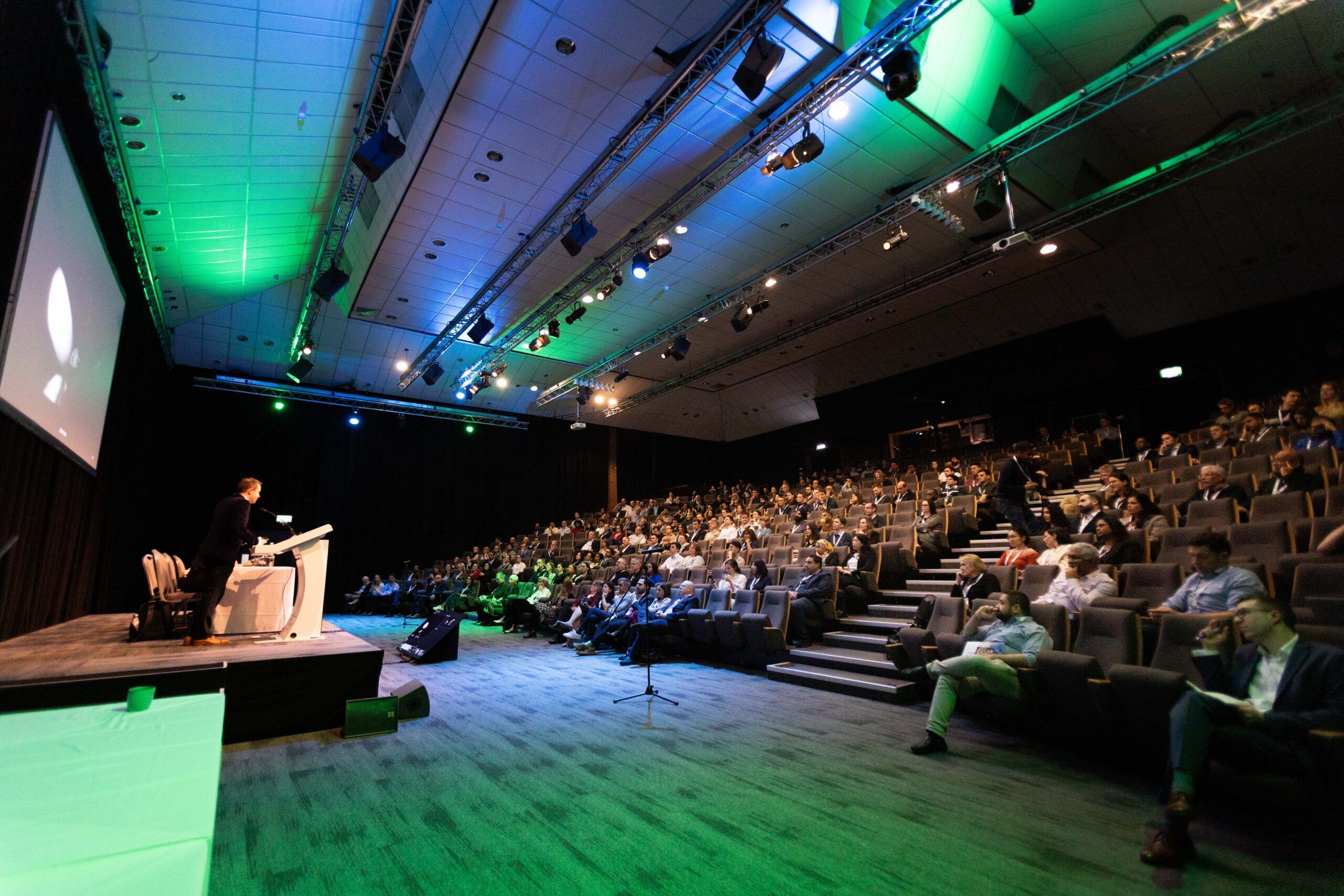
We move away from the harsh, flickering overhead fluorescents that can trigger headaches or sensory overload. By using adjustable LED lighting and creating “strobe-free” zones, we can create a much more comfortable atmosphere that keeps people in their seats longer.
Localised and Directional Sound
By using directional speakers, we can keep the audio focused exactly where it needs to be: on the stage. This prevents noise from bleeding into the halls, networking areas, or quiet zones, ensuring that people who need a break from the noise can actually find one.
Interactive, Low-Pressure Participation
One of the biggest barriers to inclusion is the “roving mic” during Q&A sessions. We use tools like Slido and other interactive polling forms so that everyone can have their say and ask questions in real-time without the anxiety of being put on the spot or having to speak in front of a large crowd. It levels the playing field, allowing the best ideas to come forward regardless of how comfortable someone feels with public speaking.
Visual Support and Live Captioning
Using live captioning keynotes and sessions isn’t just for the hard of hearing, it’s an essential tool for many neurodivergent people who process information better through reading than through auditory channels alone.
The Silent “Flappause”
For celebrations, we love introducing BSL “jazz hands” (waving hands in the air) instead of loud, sudden clapping. It maintains all the visual energy and enthusiasm of a standing ovation without the piercing noise triggers that can be distressing for many attendees.
A quiet room should be a high-quality space designed specifically for decompression. not a windowless office in the back of the building.
Strategic Placement for Inclusion
We position these zones near the main action so guests don’t feel like they’ve been exiled from the event. However, we use proper acoustic separation and signage to ensure the space remains a true sanctuary away from the hustle and bustle.
The Decompression and Active-Quiet Split
We design these zones with two needs in mind. One side offers dim lighting, comfortable seating, and noise-cancelling headphones for a total reset. The other provides “active-quiet” tools like fidget kits, sensory bins, or biophilic elements like plants to help people ground themselves.
Strict Communication Rules
To protect the integrity of the space, we establish clear rules; no phone calls, no networking, and no laptops. By marking it as a “no-work zone,” we give guests permission to truly switch off and recover their energy.
The noise and crowds of a lunch hall can be one of the most stressful parts of an event, but the right catering strategy can change that.
Total Ingredient and Texture Transparency
We label every dish clearly, going beyond simple allergens to include notes on texture and strong scents. This allows guests to make informed choices and avoid sensory triggers before they even pick up a plate.
The “Plain Option” Standard
We always ensure high-quality, “safe” food options are available. Sometimes a simple, reliable meal, such as plain protein and grains, is exactly what a guest needs to stay comfortable and fueled for the rest of the day.
Staggered Service and Quiet Dining
Offering “Grab and Go” stations or staggered lunch times allows people to avoid the chaos of a crowded buffet line. We can even designate a specific area of the catering hall as a low-noise zone for those who want to eat in peace.
Technology is a great tool, but having trained people on the ground is what really makes an event feel safe and welcoming.
The Accessibility Concierge
We deploy dedicated staff members who are trained specifically to assist with sensory needs and navigation. Identifiable by specific badges or vests, they serve as a go-to resource for anyone feeling overwhelmed or lost.
Proactive Staff Training
The Maximillion conference planning team is trained to recognise the subtle signs of sensory overwhelm. This allows us to offer support discreetly – perhaps by pointing out a quiet spot or offering a pair of earplugs – before a guest reaches a point of crisis.
Flexible Participation Models
We make it standard to have standing zones and to normalise movement during sessions. If someone needs to pace at the back of the room to help them focus or sit on a bean bag instead of a chair, we ensure the environment makes them feel totally comfortable doing so. We can also cater to virtual and hybrid team building events.
We’ve seen firsthand how these shifts in event planning lead to much higher engagement and better feedback. Whether it is using tools like Slido to allow people to participate in Q&As without the pressure of a microphone or creating chill-out zones with starlight projections at a large conference, the goal is always balance.
At Maximillion, we handle all the complex logistics of these setups so you can focus entirely on your message. Our mission is to build spaces where every guest can truly enjoy the exhibition or conference, rather than spending all their energy just trying to get through it.
Get in touch with our team today to discuss how we can weave neurodiversity-friendly design into your next indoor team building event.
Ready to create your event or just want to find out more? Talk to our team of event creators today!
Ready to create your event or just want to find out more? Either way, we’re waiting to hear from you.
"*" indicates required fields